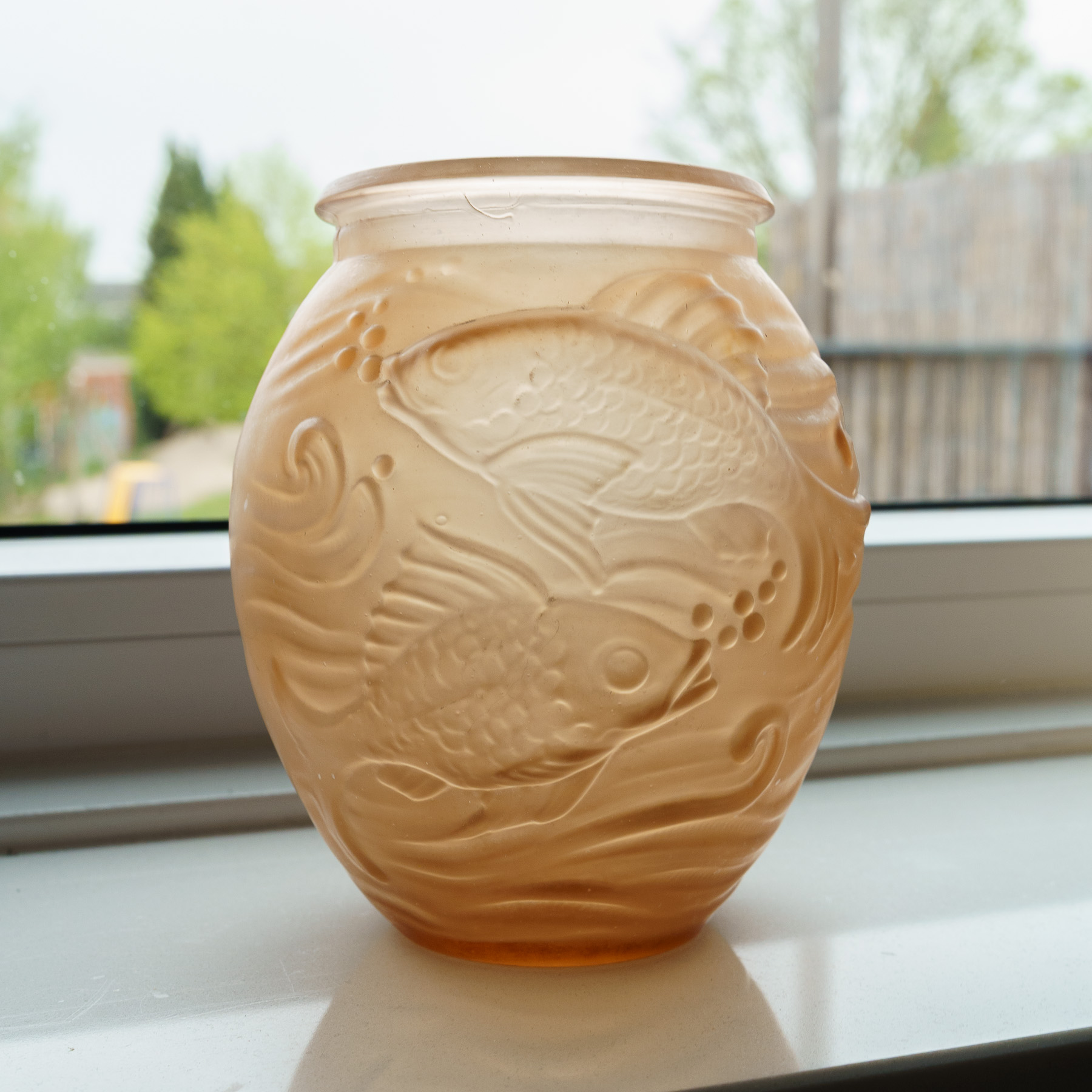
Discover a piece of French glassmaking history with this exquisite “Poissons” (Fish) vase by Souchon-Neuvesel. Originally designed in the Art Deco period, this specific example bears the SGP (Société Générale des Produits verriers) mark, signifying its production during the important post-WWII era of industrial reconstruction in France. It is a masterful blend of pre-war aesthetic elegance and the resilience of French craftsmanship.
Craftsmanship & Design
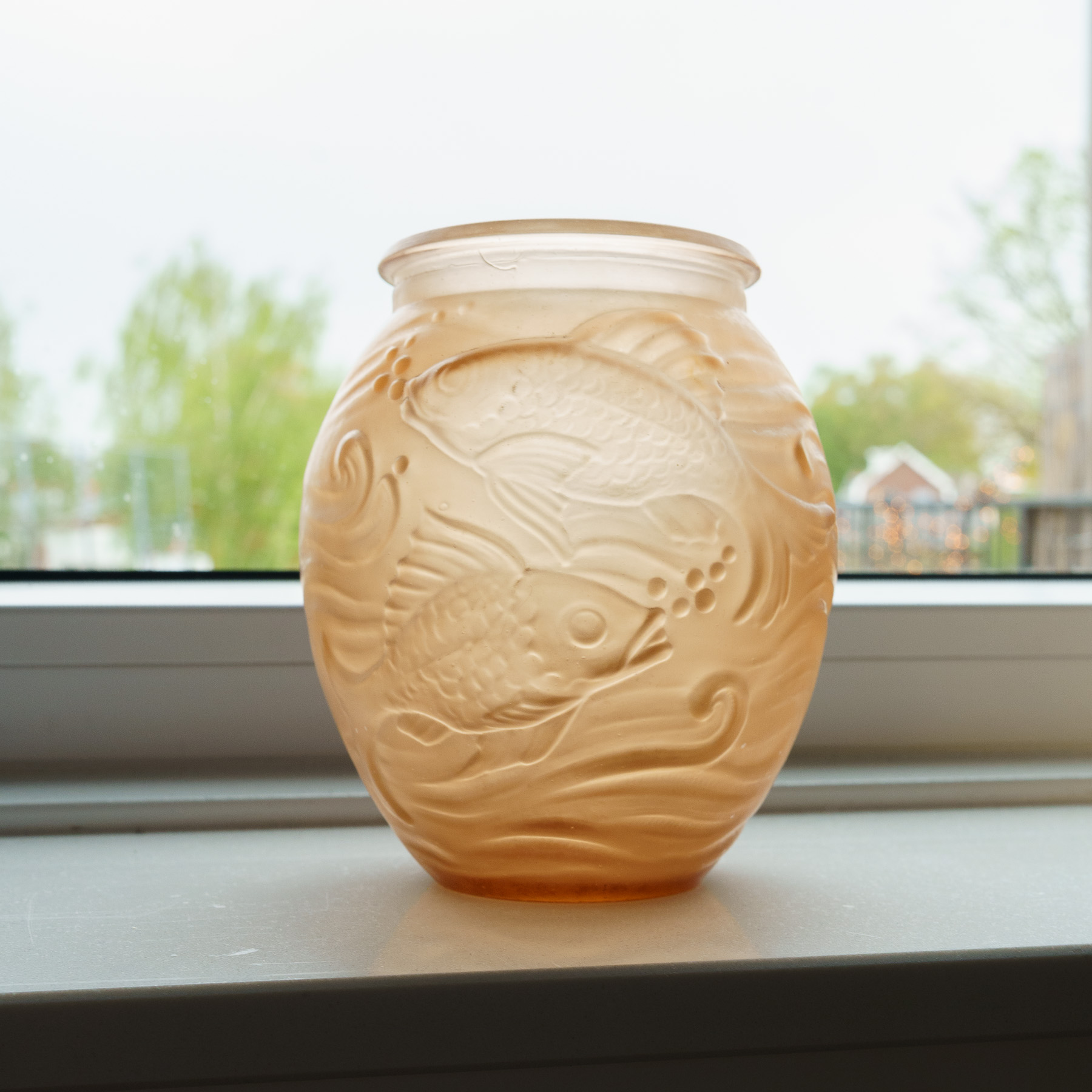
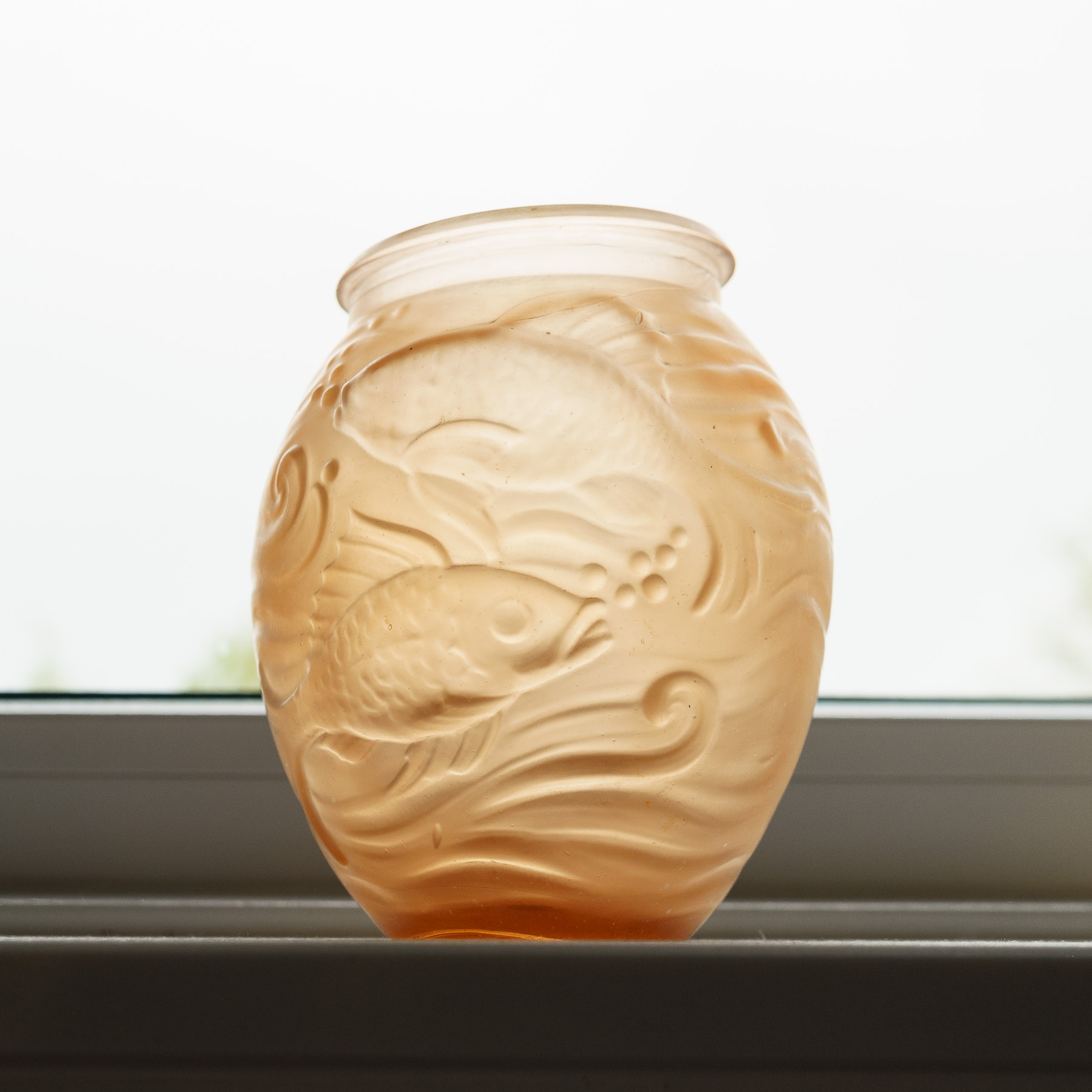
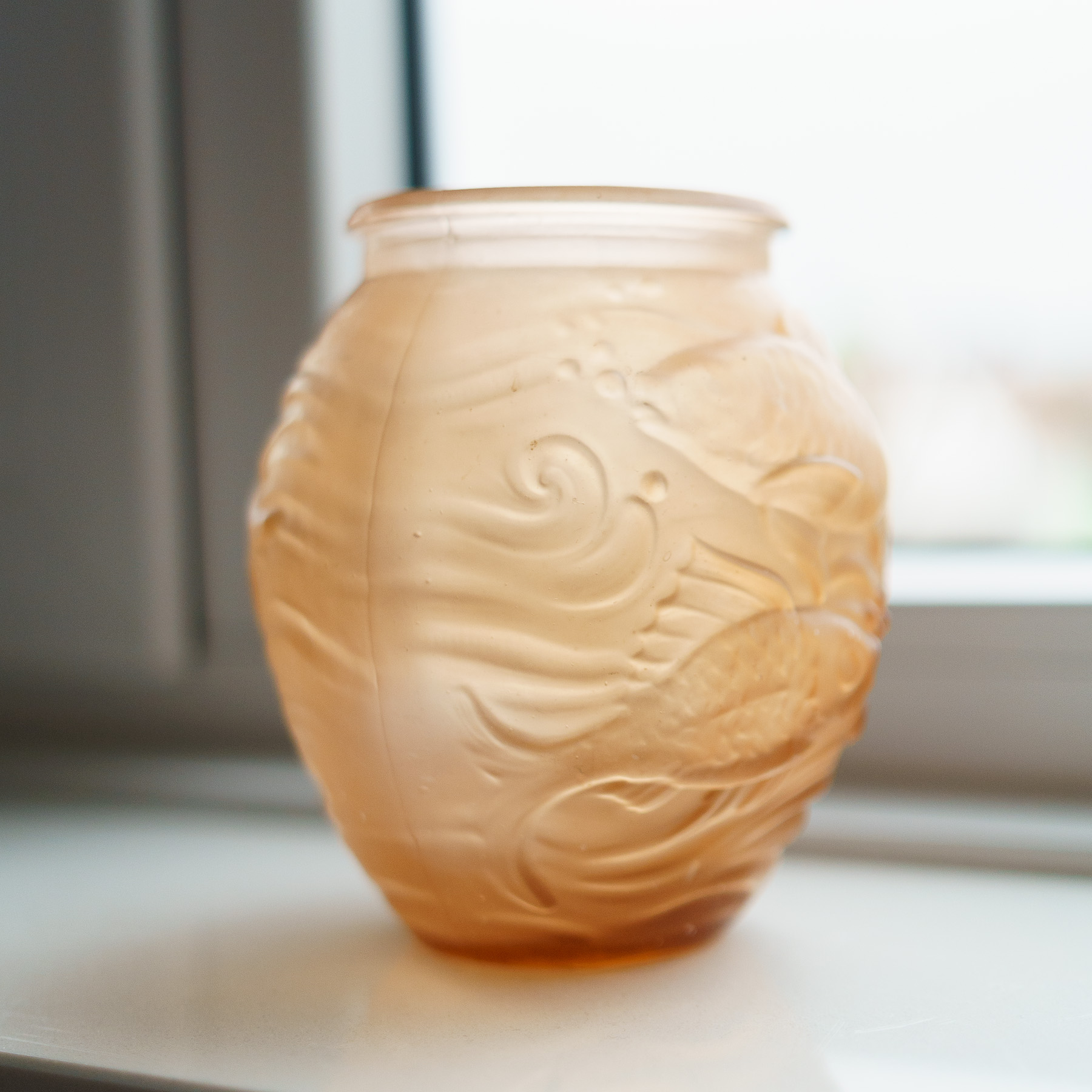
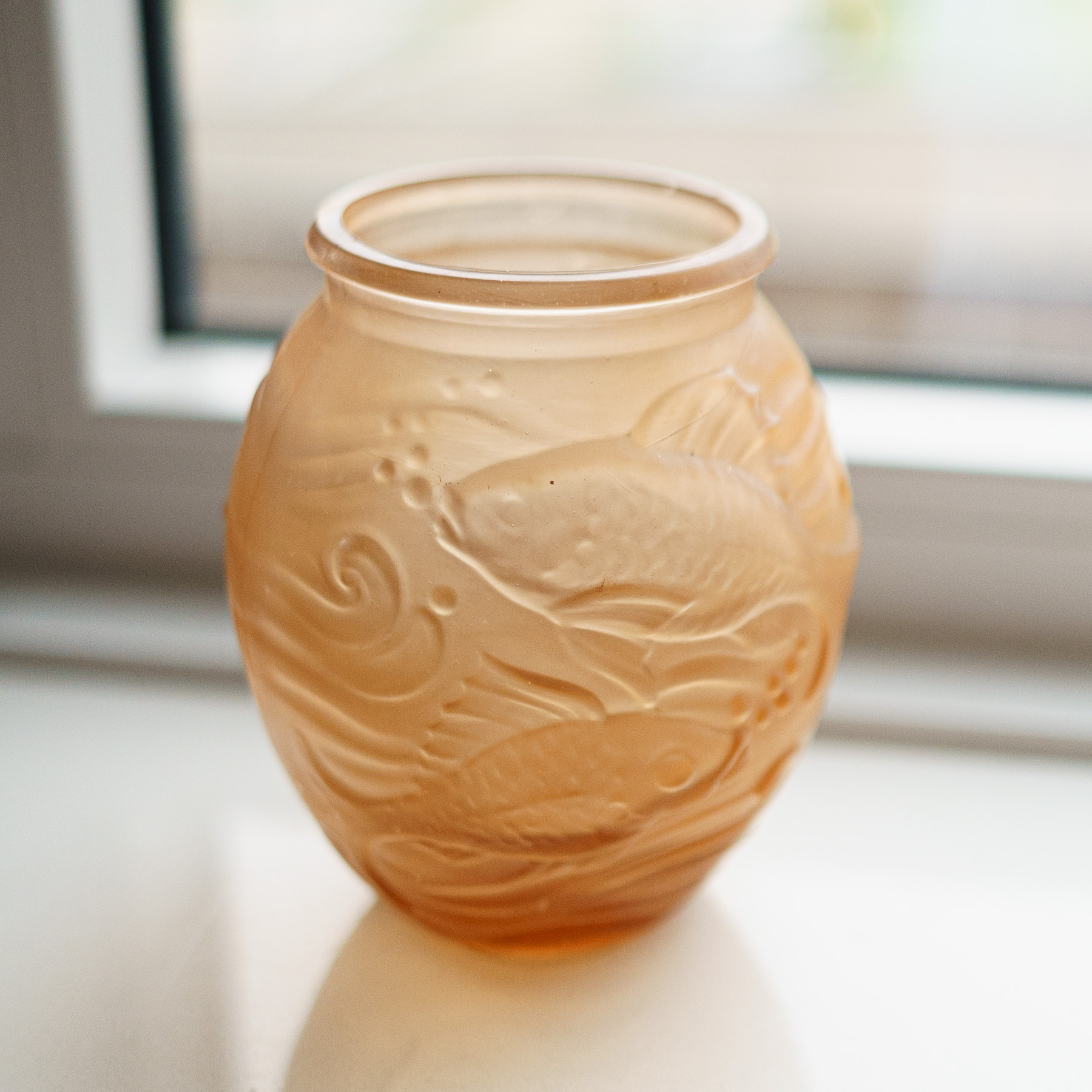
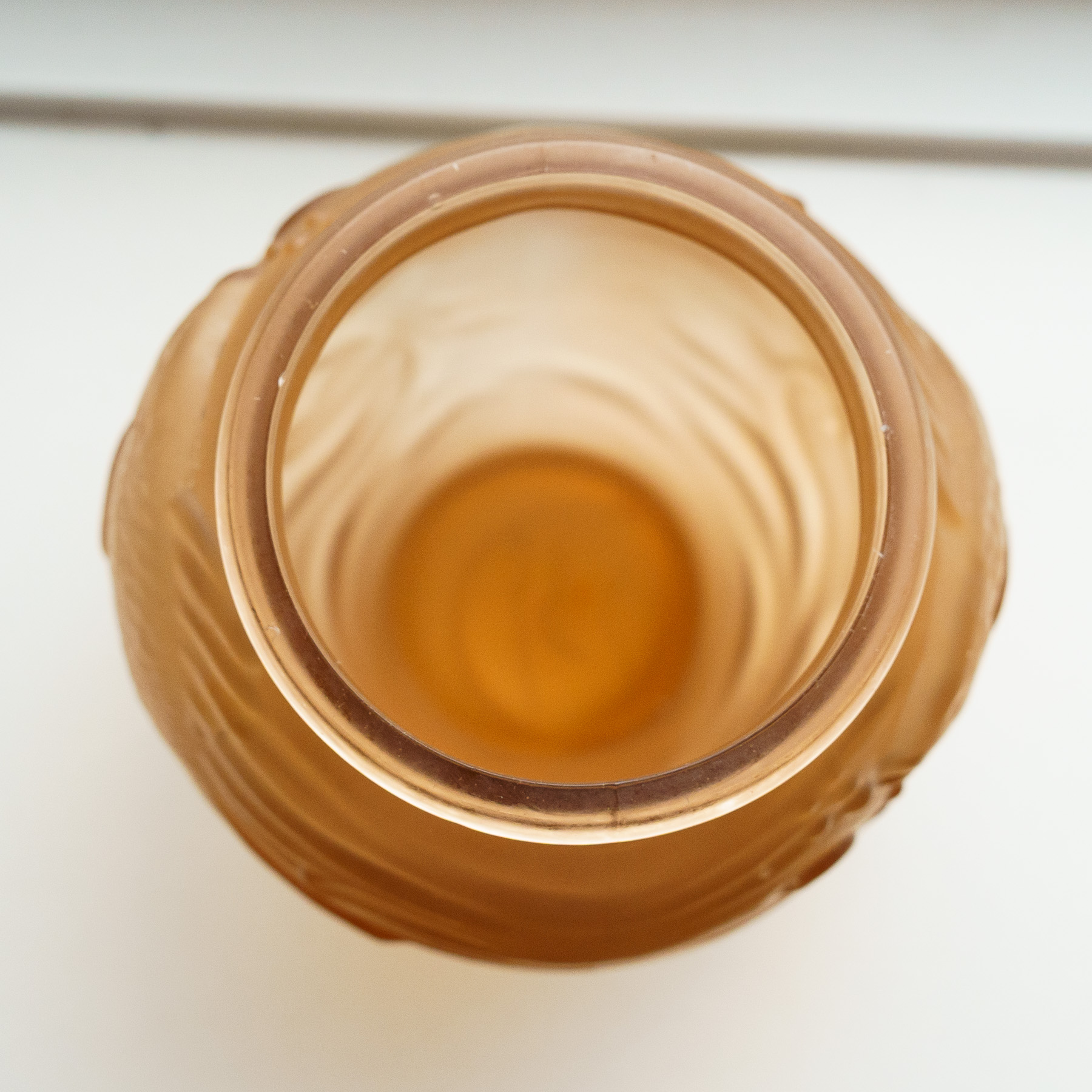
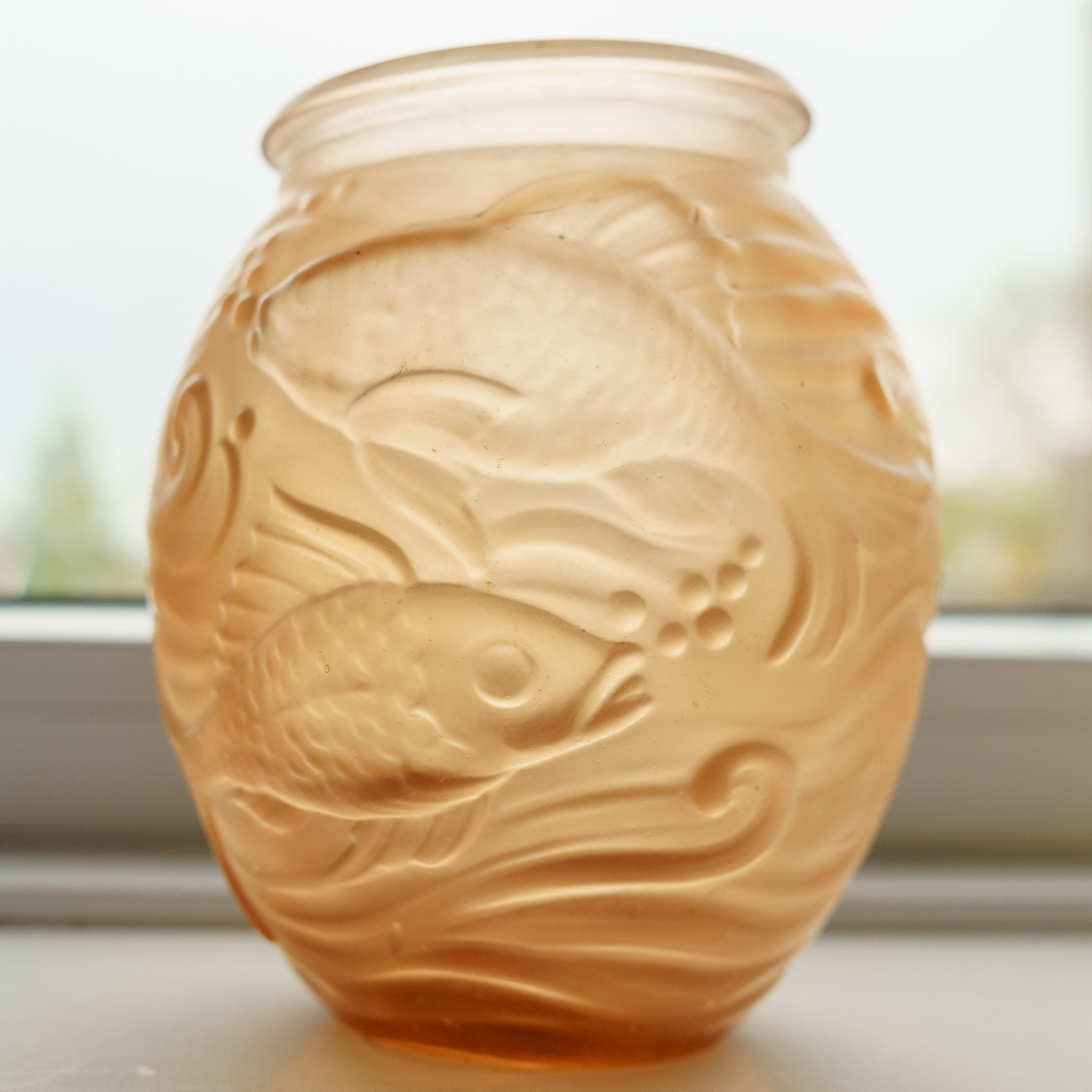
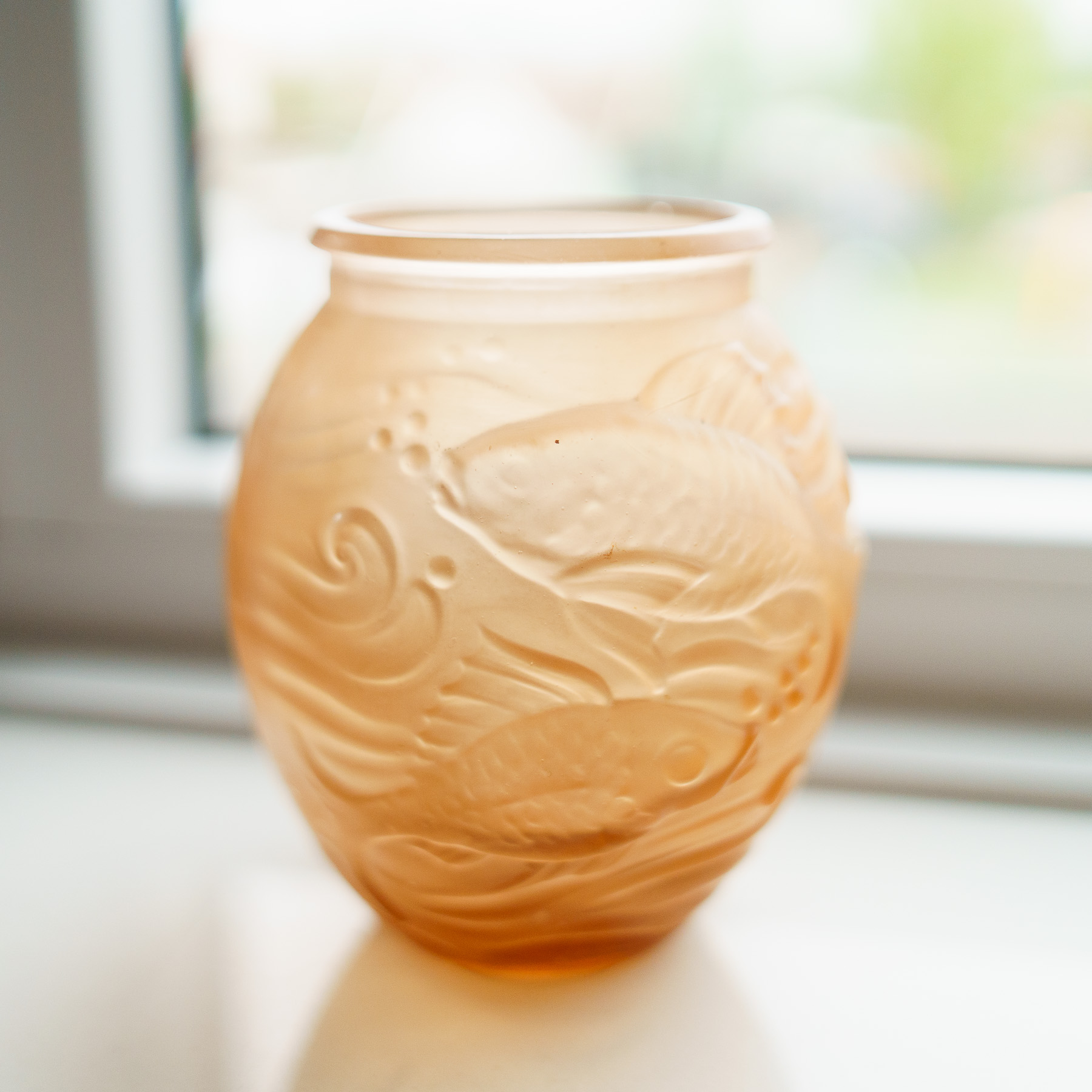
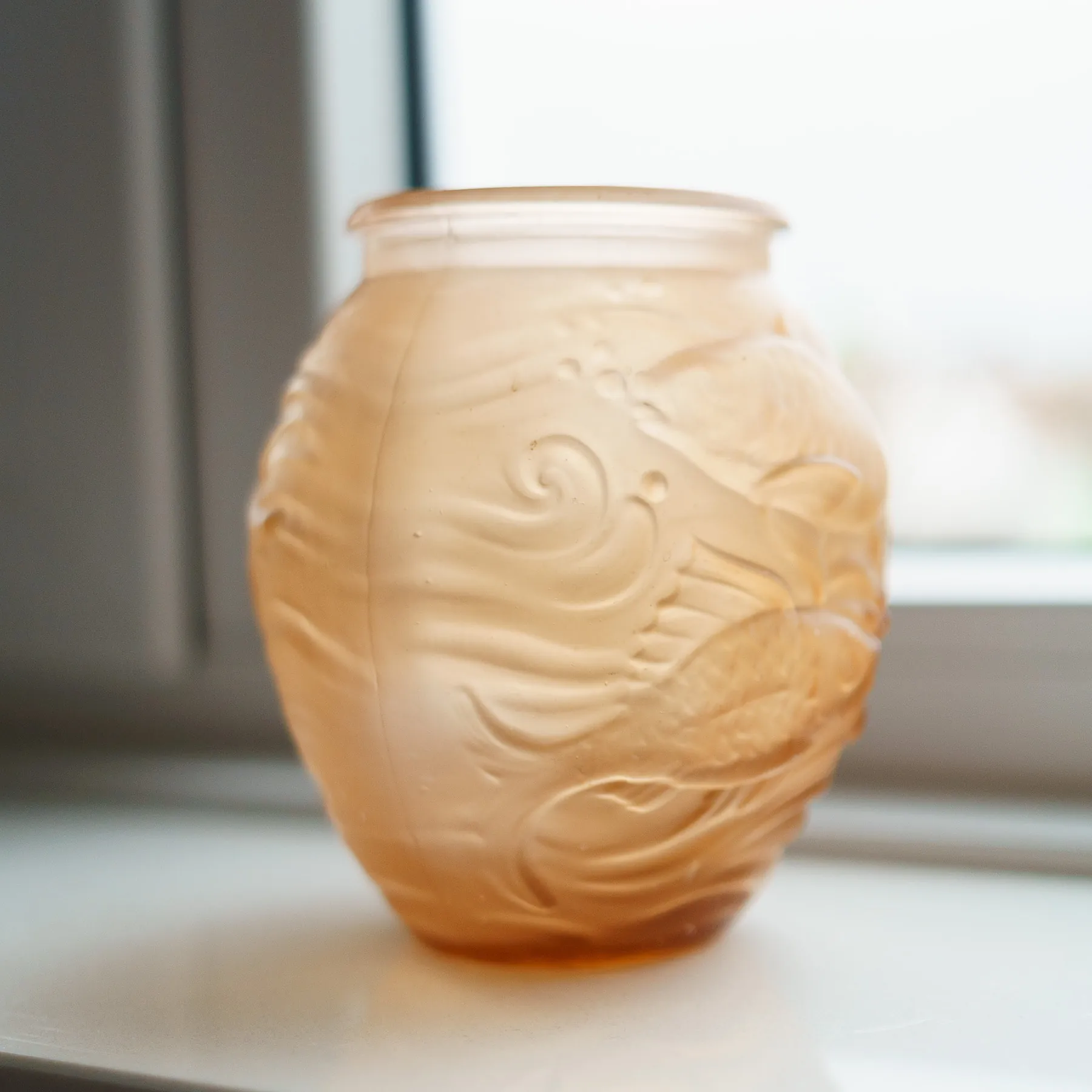
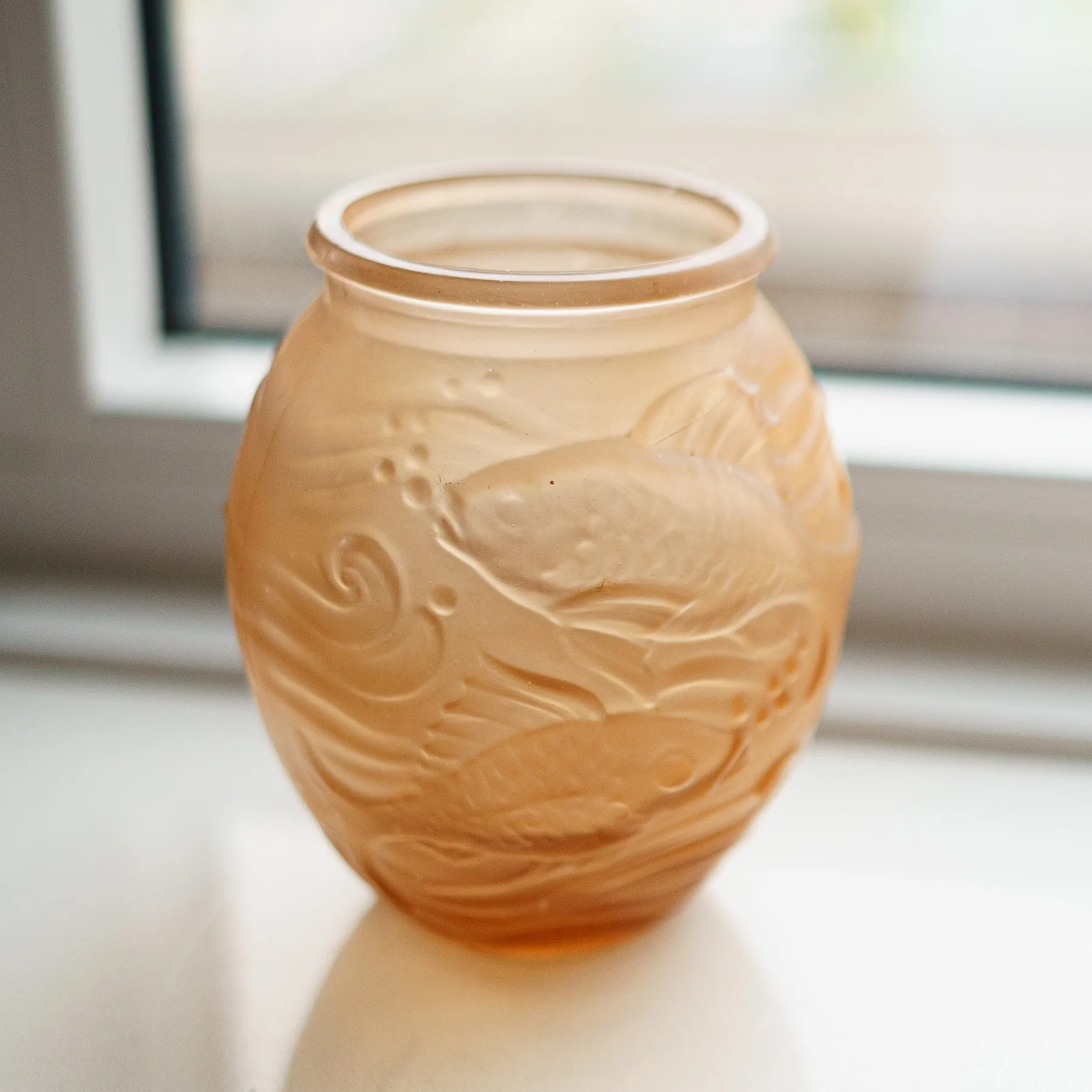
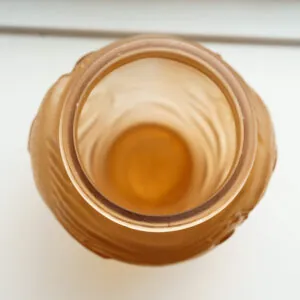
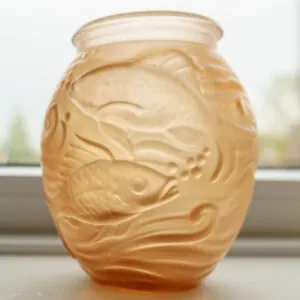
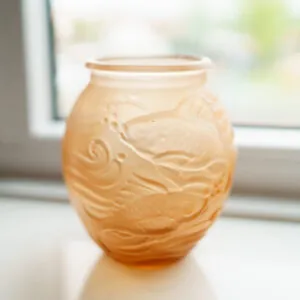
This Model 251 vase is crafted from frosted (satined) pressed glass in a warm, honey-amber hue. The design features a continuous, high-relief frieze of koi fish swimming through a sea of stylized waves and bubbles. The detail is remarkably sharp, with the frosted finish creating a soft, velvety texture that mimics the luxurious “opalescent” style of high-end French art glass.
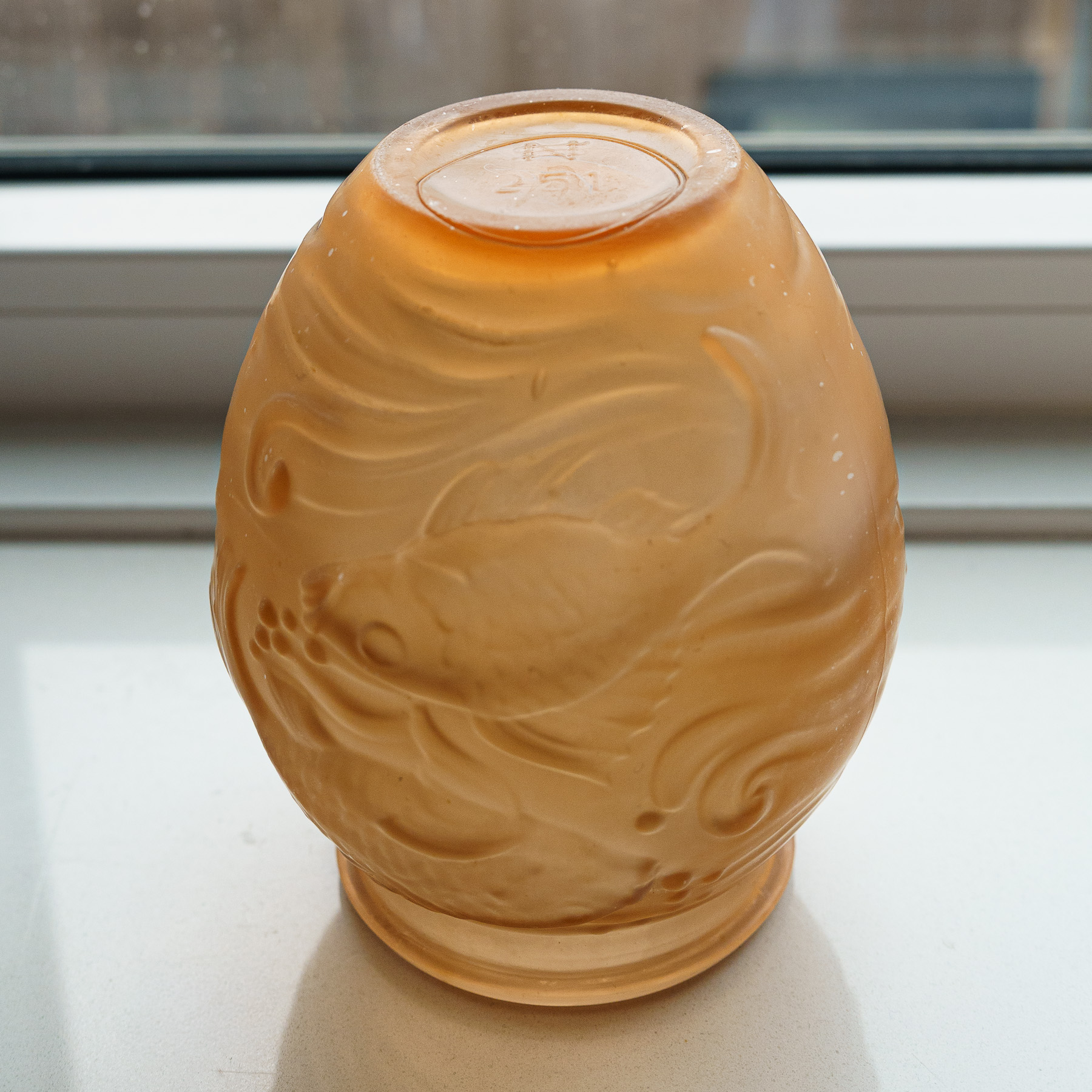
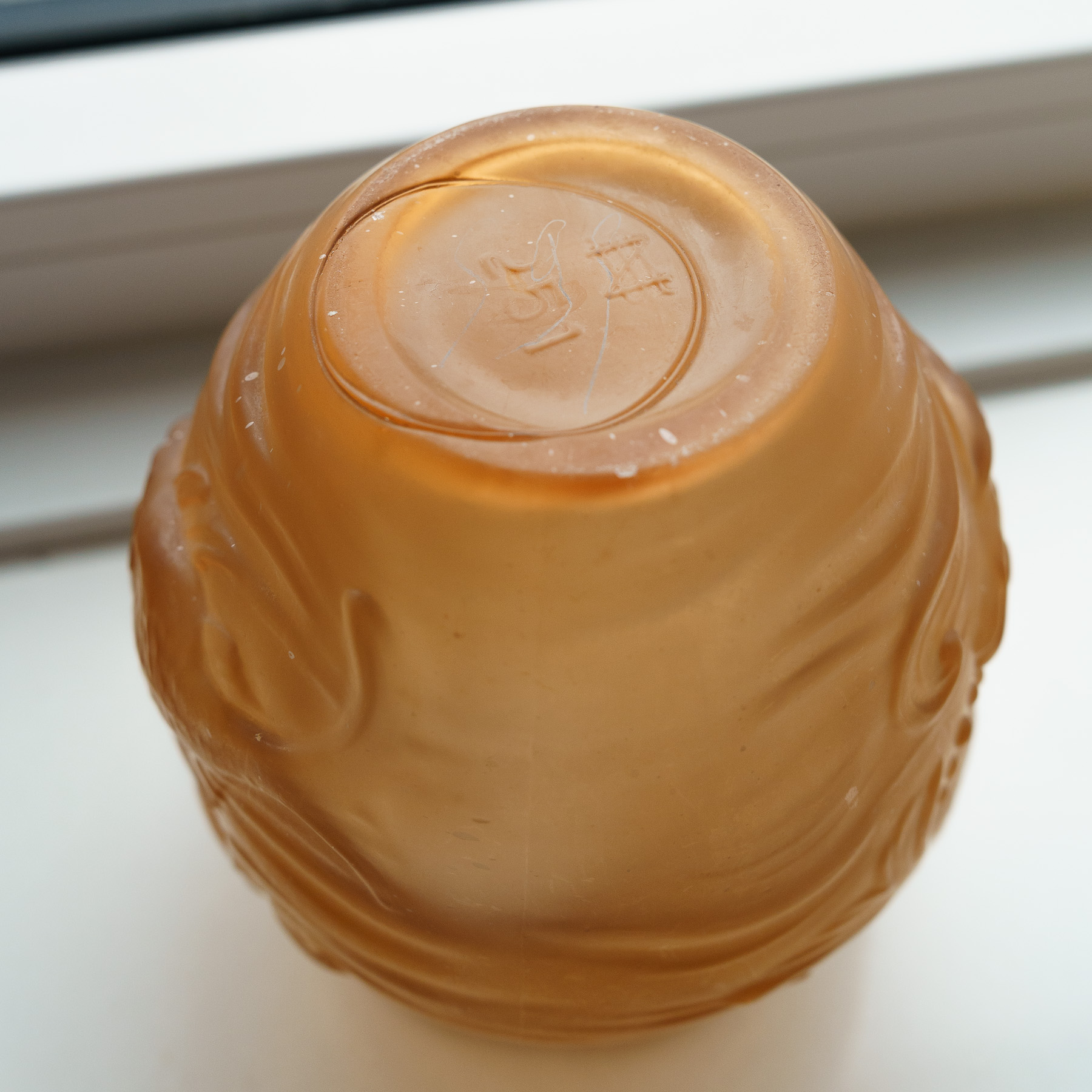
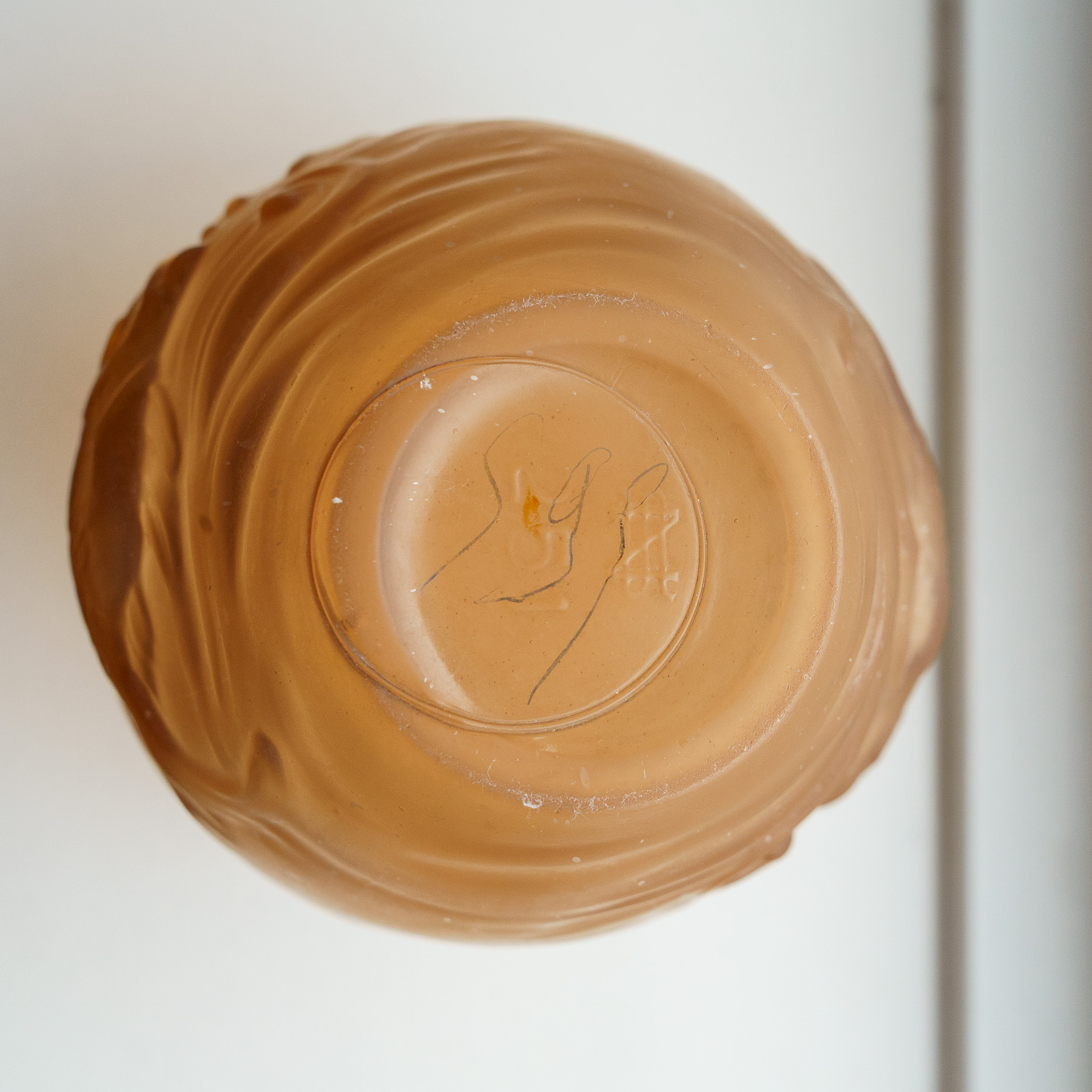
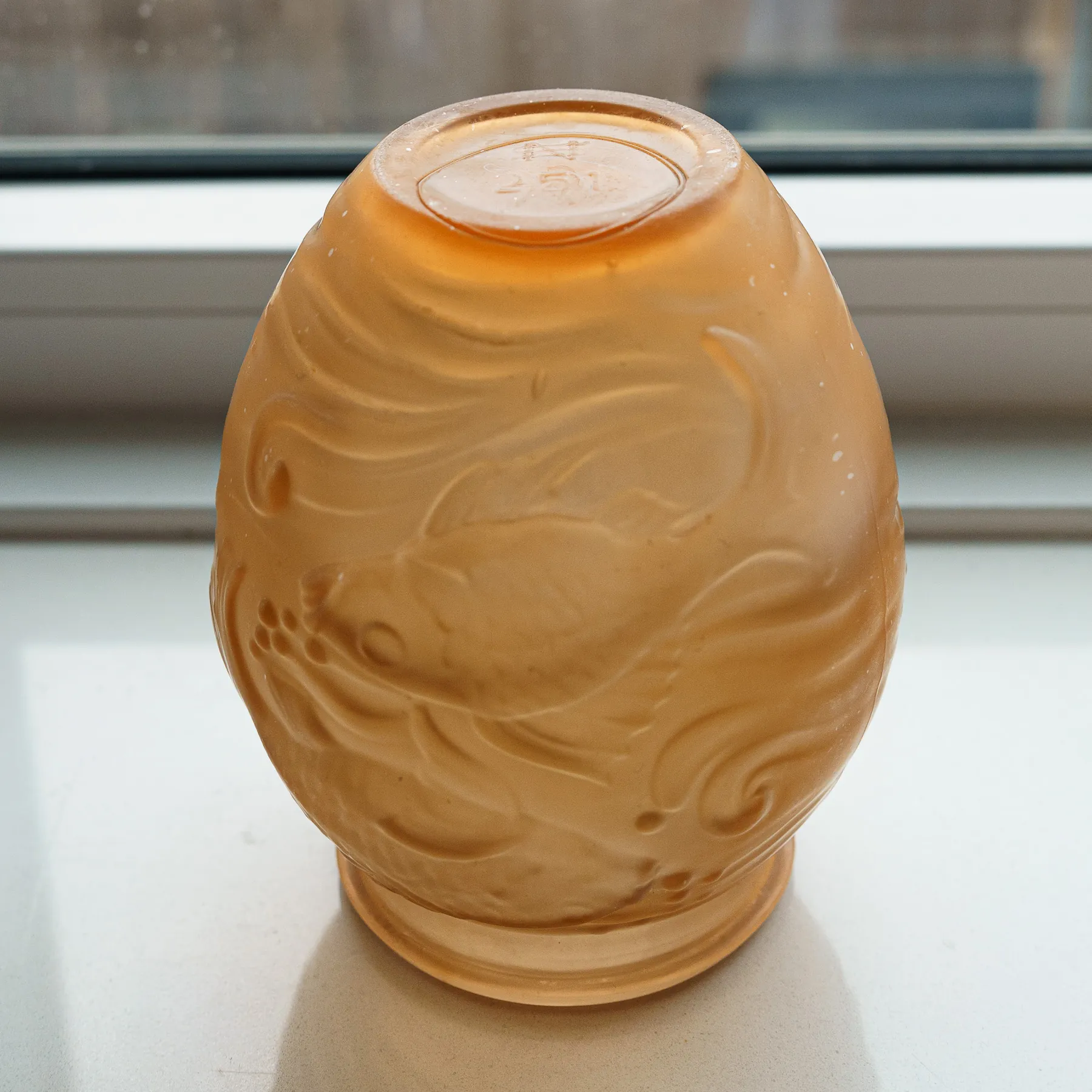
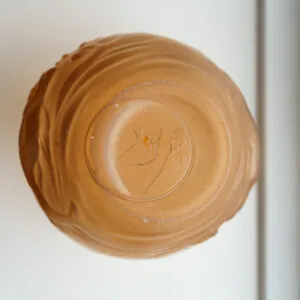
The “Poissons” motif was one of Souchon-Neuvesel’s most successful designs, competing directly with the naturalistic themes of René Lalique. The piece is marked on the base with “SGP 251”, linking it to the Givors glassworks during the mid-20th century merger period.
Versatility & Styling
The warm amber glow of the glass makes this vase an ideal decorative object for a sunlit spot. When placed near a window, the light filters through the frosted fish, giving the scene a lifelike, aquatic depth. Its rounded, organic form and rich history make it a sophisticated addition to any Mid-Century, Art Deco, or Modernist interior.
Specifications
- Manufacturer: Souchon-Neuvesel (Givors, France)
- Marking: SGP 251 (Société Générale des Produits verriers)
- Period: Circa 1945–1955 (Post-WWII production of an Art Deco design)
- Material: Frosted Amber Pressed Glass
- Model Number: 251
- Condition: Excellent condition. No chips or cracks; the frosted finish remains consistent and beautiful.
Collector’s Note
Collectors value Souchon-Neuvesel pieces marked SGP for their historical significance as “reconstruction glass.” While the design speaks to the glamour of the 1930s, the mark tells the story of the French industrial revival after 1945. It is a rare opportunity to own a piece that bridges two of the most influential periods in European design.