
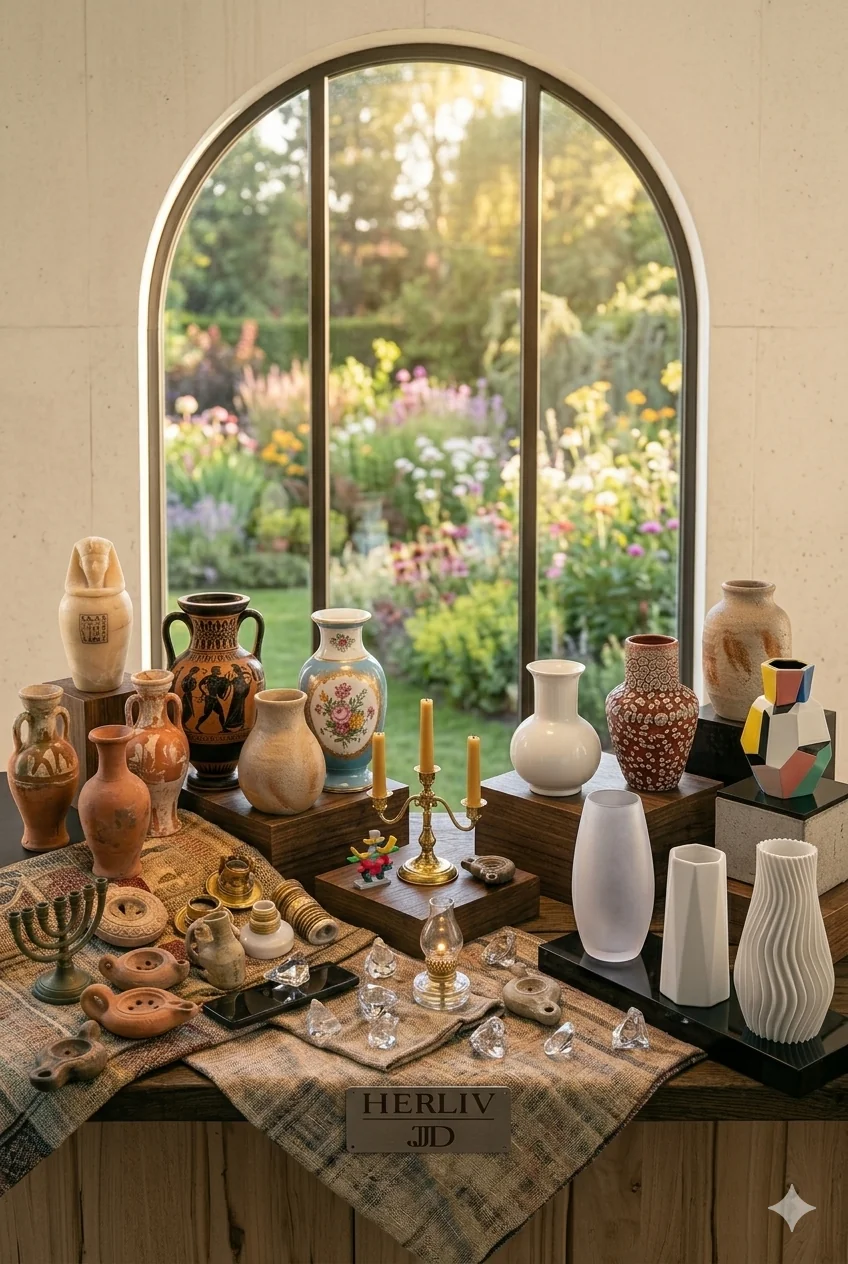
I used to tell people that thrift stores were magical places where you could find authentic French crystal for €3 and walk away feeling like you’d uncovered the greatest treasure. Last week, I visited thirteen different secondhand shops in one day across my region in the Netherlands and I need to be honest about what I found: the game has changed.
Five years ago, thrifting was a hidden pleasure. Today, it’s become something of an arms race. The rise in popularity of secondhand shopping and the professionalization of charity retail chains have fundamentally transformed the landscape. What does this mean for collectors like us?
The treasures are still there. But finding them requires a different mindset and a lot more patience.

Why Thrift Stores have changed
Walk into a typical secondhand store today and you’ll notice something immediately: the prices. Not everywhere, but increasingly, yes. Items that would have cost €2–5 just five years ago now carry price tags of €15–30. Sometimes more. This isn’t random, and it’s not unfair. Here’s what’s happened:
The Professionalization of Thrifting
Thrifting has shifted from a casual hobby to a serious market. Interior stylists from major publications like VT Wonen and Elle Decoration now actively shop at established vintage locations, signaling that secondhand shopping has moved from thrift culture to professional interior design sourcing.
When a thrift store manager realizes they’re holding inventory that interior designers and serious collectors actually want, they start paying attention. Staff are trained to spot value. Donations are sorted more carefully. The dusty, chaotic “find anything” experience has been replaced with more curated, intentional shopping.
This is actually good for the organizations. Thrift stores depend on donations and sales to fund social projects. Higher prices mean more revenue for charity work. But for hunters accustomed to hunting, it stings.
The Technology Problem: Google Lens
And then came Google Lens and image-recognition tools.
Here’s the scenario that plays out in thrift stores across the world dozens of times a day: A staff member picks up a vintage crystal glass. Their phone comes out. They point Google Lens at it or use AI for a quick research. Within seconds, they see “similar items” listed online for €25–€50. They price the piece at €20–€35, feeling confident they’ve done their research.
But here’s where it gets complicated.
“Similar-looking” doesn’t mean identical. A generic crystal coupe on Etsy or eBay listed for €45 might be:
- By a known manufacturer (you found a rare Orrefors or Baccarat piece)
- In worse condition
- Completely overpriced and sitting unsold for months
- A different size, era, or design quality
Google Lens and AI don’t understand quality, condition, rarity, or market reality. It only recognizes visual similarity. What feels like “fair pricing” based on algorithm searches often misses the nuance that separates a €15 piece from a €45 treasure.
The Reality Check:
What Actually Happened During My Hunt
Let me be transparent about my thirteen-store expedition. I found beautiful pieces. Genuine finds. But the experience was different than it would have been five years ago.
What I found:
- Six mismatched Crystal Liqueur Coupes
- One mystery Ice Crystal sculpture (12cm diameter)
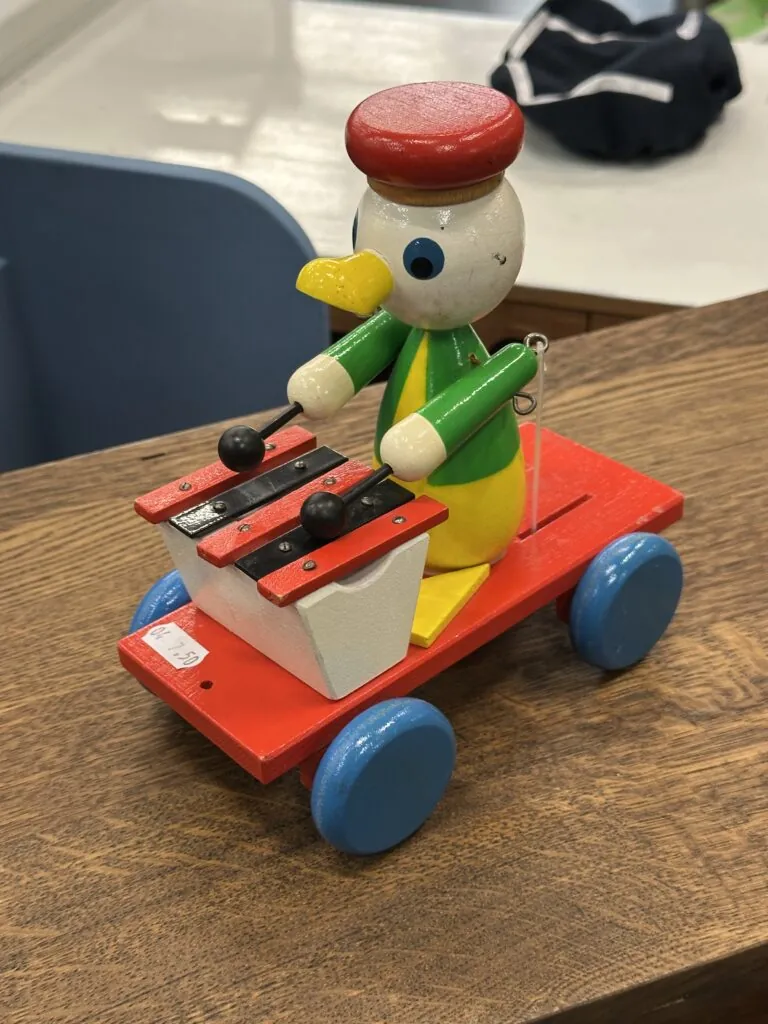
- Wooden Duck Pull Toy with Xylophone.
- Several records and 7″ singles for my private collection
What it cost me:
- 13 store visits across the region
- Approximately 7 hours of hunting
- Total spend: €25
The bargains are there. But they require something crucial: knowledge.

Why Knowledge Still wins over Technology
Here’s what I learned during this hunt that Google Lens cannot teach:
Understanding Quality:
The weight of the crystal, the clarity, the subtle amber tone that speaks to age, tiny air bubbles from hand-blowing techniques. These are signatures of authentic vintage craftsmanship that no phone algorithm can truly evaluate.
When I held those six crystal coupes, I immediately knew they were exceptional. Not because they matched an online listing, but because I could feel the density of the material, see the precision of the hand-cut rays, and recognize the radiating sunburst/floral pattern as a signature of mid-century European design.
A kringloop (Dutch word for thrift shop) employee with a phone would see “crystal coupes” and price them based on what Google shows. I saw “authentic mid-century crystal with exceptional clarity and hand-worked precision”.
Knowing What Doesn’t Look Valuable:
The mystery candleholder was perhaps my best find precisely because it doesn’t photograph well on Google. The geometric facets create confusing light patterns. It’s not a “named designer” piece. Its function is unclear. Google Lens would struggle to identify it definitively.
But knowing about brutalist design movements, understanding the historical context of experimental glasswork, and recognizing the handcraft involved meant I could see what others missed.
Patience & Presence:
I visited stores on a weekday morning. not the popular Friday and Saturday rushes when stock has already been picked over. I wasn’t in a hurry. Google Lens teaches speed. Vintage hunting requires patience.
The Pricing Conversation: Fair vs. Cheap
Here’s where I think collectors sometimes get frustrated unnecessarily. Thrift shops aren’t obligated to give us bargains. Their mission is to raise money for charitable work and give donations a second life. Not to supply collectors with profit margins.
If you’re a dealer, buying at a thrift shop to resell, you’re right to scrutinize pricing. You need profit margin to cover your research, listing costs, photography, storage, and risk.
But if you’re a collector buying for your own home? The calculation changes.
I found a set of six crystal liqueur glasses. Could I have haggled? Maybe. Should the price have been lower? By my vintage dealer calculations, yes. But here’s the thing: I didn’t care. I loved the pieces. The price was reasonable for what I was getting. I bought them.
Elsewhere, I saw a beautiful vintage carpet listed for €200. I walked away. The price felt inflated based on a quick Google search, and I wasn’t emotionally connected enough to the piece to justify it.
The difference? Authenticity of desire. If you love something AND the price is in the realm of fair, it’s worth buying. If you’re hunting purely for deals, you’ll be disappointed increasingly often.
The Uncomfortable Truth: Thrift Stores Are Changing Into Vintage Boutiques
Resellers across Europe increasingly avoid major thrift chains because they maintain noticeably higher prices, with customers questioning whether secondhand items are actually cheaper than original retail prices. This is the uncomfortable reality of modern thrifting.
Some dedicated thrift shops are morphing into something else entirely: curated vintage boutiques with boutique pricing. Nothing wrong with that, they’re businesses. But it’s not the same as the thrift store experience most of us fell in love with.
Stylists from major interior design publications now shop at established vintage locations, confirming that thrifting for design has shifted from casual thrift culture to professional interior design sourcing.
Does this mean the old-fashioned hunt is dead? No. But it means:
- You need to know which thrift stores still operate as actual secondhand shops
smaller, community-based, independent shops tend to be cheaper than big chains - You have to accept that many pieces will be overpriced – and skip them without regret
- Your knowledge matters more than luck – the algorithm hasn’t caught up to your expertise
- Timing and relationships matter
Strategic Thrifting in 2026
Based on my thirteen-store thrifting experience, here’s what actually works now:
- Choose Thrift Stores Strategically
Major thrift chains tend to price higher and stock more commercially, while smaller, community-based locations and independent vintage thrift shops maintain lower prices. I found my best pieces at smaller, locally-run stores. not the big chain locations. - Hunt During Off-Peak Hours
Monday morning after weekend donations or tuesday afternoons. These are when fresh inventory appears before it’s picked through by others. - Build Relationships
Get to know the staff. Visit the same thrift stores regularly. Many managers will literally set aside pieces they think you’ll love. This is the advantage that no algorithm can replicate. - Accept Higher Prices, Strategically
Yes, some pieces will cost more than you’d like. But authentic vintage from thrifting is still significantly cheaper than:
If you buy smartly when thrifting, you’re still ahead. - Learn Beyond Your Comfort Zone
Don’t just know glass if you love glass. Know ceramics, textiles, lighting, metalware, design movements.
A piece that most people miss is a treasure waiting. - Develop the Eye for Quality vs. Price
Not every piece is a deal just because it’s cheap. And not every expensive piece is overpriced. Learn to distinguish between:
– An undervalued treasure (rare, authentic, priced based on Google search)
– A fairly-priced piece (good quality, reasonable price for market)
– An overpriced miss (using online asking prices as evidence without understanding market reality)
What This Means for HERLIV Philosophy
The reality of thrifting in 2026 challenges our original fantasy: that we can easily rescue beautiful objects from secondhand stores and give them new life. We can. But it requires effort. It requires showing up. It requires patience. It requires walking away from most things. It requires knowledge that can’t be outsourced to an app. It requires accepting that some pieces won’t be found because someone else with a phone got there first.
But here’s what hasn’t changed: the soul of the hunt itself.
When you find something, truly find it, after searching, learning, and waiting. The connection is deeper. You’re not just buying a beautiful object. You’re engaging in a conversation with craftsmanship. You’re honoring the person who made it decades ago. You’re saying to the current world: “This matters”. The hunt has become more challenging. But the victory, when it comes, means more. Read more about the HERLIV Philosphy.
I want to end with something important. There are still pieces being donated every day. There are still treasures waiting to be found. But there are also more hunters now. More apps. More technology. More competition. The scarcity isn’t in the objects themselves. It’s in our collective patience and expertise. If you approach thrifting as a casual weekend activity, expecting easy wins, you’ll be disappointed. Thrift stores have changed. Prices reflect that.
But if you approach thrifting with attention, knowledge, and genuine affection for beautiful objects, you’ll still find the treasures. They’re still there. They’re just not hiding quite as well anymore.
That, in the end, isn’t a tragedy.
It just means that when you do find something beautiful, you’ll have earned it.
Join the Journey
Vintage hunting has changed. The easy days of walking into a thrift shop and finding treasures for cheap are mostly gone. But that doesn’t mean the magic is gone. It just means it’s hidden in a different place. The magic isn’t in the price anymore. It’s in the knowledge & patience. To say no to ninety percent of what you find, and to recognize the precious few pieces that speak to your soul. That’s where HERLIV lives.
I invite you to explore our current collection and find the piece that speaks to you. Let’s preserve the past and HERLIV the future, one object at a time.Lars Dubbelink
Founder, HERLIV
Our latest Instagram posts
Save this story on Pinterest:

Leave a Reply